Why Comparing Children’s Careers Is Dangerous (Parents Must Read)
Comparing children’s careers harms confidence and mental health. Learn why this habit is dangerous and what Indian parents should do instead in today’s job market.
A Common Habit With Hidden Harm
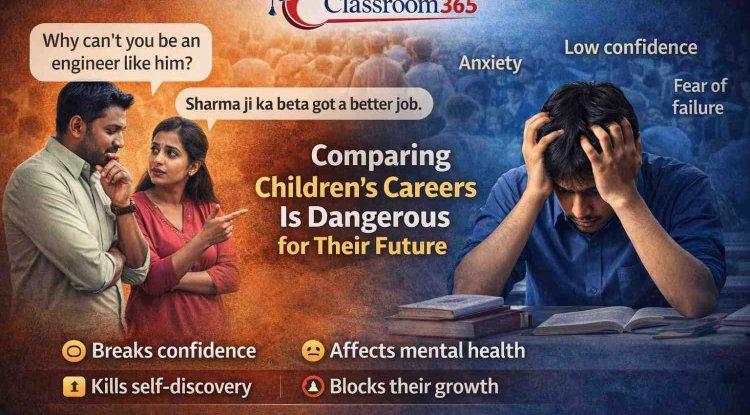
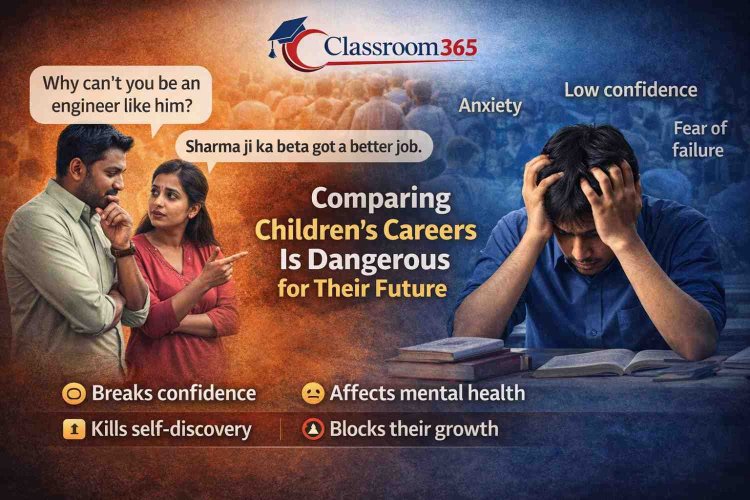
“Sharma ji ka beta engineer ban gaya.”
“Neighbour’s daughter got a ₹20 LPA package.”
In India, comparing children’s careers has become almost routine—often said casually, sometimes even with good intentions. Many parents believe comparison motivates children to work harder or “aim higher.”
But in reality, career comparison is one of the most damaging habits in parenting and education.
In this blog, we explain why comparing children’s careers is dangerous, how it affects mental health and long-term success, and what parents should do instead—especially in today’s fast-changing world.
Why Parents Compare Children’s Careers
Most parents don’t compare out of cruelty. They compare because of:
-
Social pressure
-
Fear of uncertainty
-
Desire for security and respect
-
Outdated definitions of success
-
Limited awareness of new-age careers
The intention may be protective—but intent does not cancel impact.
1. Every Child Has a Different Strength Curve
Children are not manufactured products.
Each child differs in:
-
Interests
-
Learning speed
-
Emotional intelligence
-
Creativity
-
Risk tolerance
-
Aptitude
Comparing a child interested in design, psychology, or communication with one pursuing engineering or medicine is fundamentally flawed.
???? Reality check:
Success today is no longer one-size-fits-all. Careers evolve faster than marksheets.
2. Career Comparison Damages Mental Health
Repeated comparison leads to:
-
Low self-esteem
-
Chronic anxiety
-
Fear of failure
-
Burnout at a young age
-
Depression and self-doubt
India is already witnessing a serious student mental-health crisis.
According to the World Health Organisation (WHO), depression and anxiety are among the leading causes of illness in adolescents worldwide:
???? https://www.who.int/news-room/fact-sheets/detail/adolescent-mental-health
No career, college, or salary package is worth a child’s mental well-being.
3. Comparison Creates Fear, Not Motivation
Contrary to popular belief:
-
Fear does not create long-term success
-
Pressure does not build passion
-
Comparison does not create confidence
Instead, it creates:
❌ Fear of disappointing parents
❌ Risk-avoidance mindset
❌ Loss of originality
❌ Dependency on approval
Children slowly stop dreaming for themselves—and start living someone else’s expectations.
4. The Job Market Has Changed—Parents Haven’t
Parents often compare careers based on:
-
Salary packages
-
Job titles
-
Degree names
But in 2026 and beyond:
-
Skills matter more than degrees
-
Multiple careers exist beyond engineering and medicine
-
Fields like AI, healthcare tech, design, analytics, freelancing, and entrepreneurship are growing rapidly
???? Related reading (internal link):
Careers That Will Not Be Replaced by AI in India
https://blog.classroom365.in/careers-not-replaced-by-ai-india
Comparing children using outdated benchmarks is career misguidance, not guidance.
5. Comparison Kills Self-Discovery
Career success today depends on:
-
Self-awareness
-
Continuous learning
-
Adaptability
-
Curiosity
When children are constantly compared, they:
-
Stop exploring interests
-
Suppress curiosity
-
Choose “safe” careers that they don’t enjoy
-
Fear unconventional paths
The result?
A generation of unhappy professionals with impressive resumes.
6. Long-Term Impact: Regret, Not Gratitude
Many adults later admit:
-
“I wish I had chosen differently.”
-
“I followed what my parents wanted.”
-
“I never explored my real interests.”
Career comparisons may create short-term obedience, but they often lead to long-term regret.
And regret is far more damaging than failure.
7. What Parents Should Do Instead
✔ Compare Progress, Not People
Track your child’s growth—not someone else’s achievements.
✔ Focus on Skills, Not Status
Ask:
-
What is my child good at?
-
What skills can they build?
-
How can they grow sustainably?
???? Helpful internal read:
Skill-Based Degrees vs Traditional Degrees in India (2026)
https://blog.classroom365.in/skill-based-degrees-vs-traditional-degrees-india-2026
✔ Encourage Exploration
Allow children to try, fail, pivot, and learn.
✔ Redefine Success
Success means:
-
Fulfilment
-
Stability
-
Growth
-
Mental peace
—not just salary figures or social approval.
8. The Role of Career Counselling
Professional career counselling helps:
-
Identify aptitude and interests
-
Reduce parental confusion
-
Avoid blind comparisons
-
Create realistic, flexible career roadmaps
The OECD highlights that structured career guidance improves long-term employment outcomes:
???? https://www.oecd.org/education/career-guidance/
Career decisions should be guided—not forced.
Final Thoughts: Comparison Breaks Confidence, Not Barriers
Comparing children’s careers does not make them stronger.
It makes them doubt themselves.
In a world where careers are evolving faster than ever, the greatest gifts parents can give are:
-
Trust
-
Support
-
Understanding
-
Freedom to grow
Let children compete with their own potential, not with someone else’s path.
Because every child’s journey is different—and that’s not a weakness.
It’s a strength.
???? Explore More Parent & Career Guidance on Classroom365
???? https://blog.classroom365.in/
???? Contact: info@classroom365.in
What's Your Reaction?