Skill-Based Degrees vs Traditional Degrees in India: What to Choose in 2026
Skill-based degrees vs traditional degrees in India—what should students choose in 2026? A clear guide for students and parents.
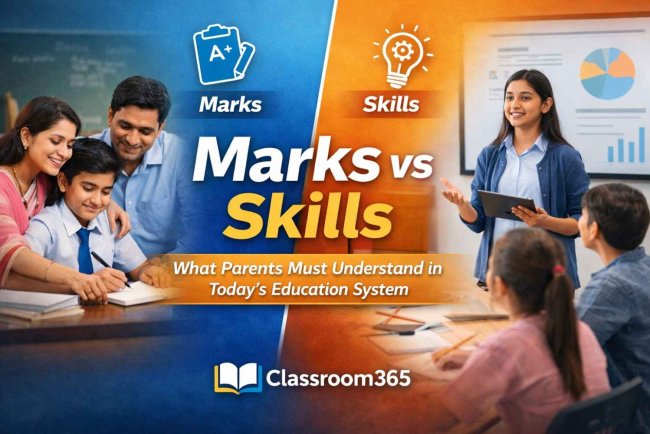
India’s education landscape is changing faster than ever. With rapid technological advancement, shifting job markets, and the implementation of education reforms, students and parents are asking a critical question:
Should we choose a traditional degree or a skill-based degree in 2026?
This is no longer a simple choice between “college” and “course.” It’s about employability, adaptability, and long-term career stability. This blog breaks down both paths clearly and humanly—so students can make informed decisions without confusion or fear.
Understanding Traditional Degrees in India
Traditional degrees include programs such as:
-
BA, BSc, BCom
-
Engineering (BTech/BE)
-
Medical, Law, Management
-
MA, MSc, MCom and other postgraduate programs
These degrees have long been the backbone of Indian education.
✅ Strengths of Traditional Degrees
-
Strong academic foundation and theoretical depth
-
Widely recognized by universities, government bodies, and employers
-
Essential for regulated professions (doctor, lawyer, professor, researcher)
-
Opens pathways to higher studies, civil services, and academia
⚠️ Limitations Students Face Today
-
Often limited practical or industry exposure
-
Slow curriculum updates compared to market needs
-
Overcrowded degrees with intense competition
-
Degree alone may not guarantee employability
In 2026, a degree without relevant skills is no longer enough.
What Are Skill-Based Degrees?
Skill-based degrees focus on practical, job-ready competencies rather than only theoretical knowledge. These programs are often designed with industry collaboration.
Examples include:
-
Data Science & AI programs
-
Digital Marketing & Performance Marketing
-
Cybersecurity & Cloud Computing
-
UX/UI Design
-
Financial Modeling, Business Analytics
-
Media, Content, and Communication Programs
Many are offered as:
-
Degree + skill hybrid programs
-
Industry-certified degrees
-
Internship-integrated courses
Why Skill-Based Education Is Rising in India
The rise of skill-based education is not accidental. It’s driven by real-world demands:
-
Employers now hire for skills, not just degrees
-
Startups and tech companies prefer hands-on talent
-
Automation and AI are reshaping job roles
-
Students want faster ROI on education investment
The National Education Policy 2020 strongly supports:
-
Multidisciplinary learning
-
Vocational and skill-based education
-
Flexible degree structures
-
Industry-aligned curriculum
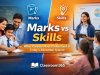
Skill-Based Degrees vs Traditional Degrees: A Clear Comparison
| Aspect | Traditional Degree | Skill-Based Degree |
|---|---|---|
| Focus | Theory & academics | Practical job skills |
| Curriculum | Slow to update | Frequently updated |
| Employability | Medium (without skills) | High (job-ready) |
| Internships | Optional | Often mandatory |
| Career flexibility | Moderate | High |
| Ideal for | Research, govt, academia | Corporate, startups, freelancing |
What Employers Want in 2026
By 2026, Indian employers are prioritizing:
-
Practical problem-solving ability
-
Digital and technical skills
-
Internship and project experience
-
Communication and adaptability
-
Continuous learning mindset
A degree shows education, but skills show readiness.
Who Should Choose a Traditional Degree?
You should lean toward a traditional degree if you:
-
Want to pursue medicine, law, teaching, or research
-
Are preparing for UPSC, SSC, or other government exams
-
Plan to study abroad or pursue higher academic research
-
Prefer structured academic learning
???? But even here, skill add-ons are essential.
Who Should Choose a Skill-Based Degree?
A skill-based degree may be better if you:
-
Want early job exposure and internships
-
Are interested in tech, digital, or creative fields
-
Prefer learning by doing rather than memorizing
-
Want flexibility to switch careers or freelance
-
Aim for private-sector or global roles
The Smart Choice in 2026: Degree + Skills
The real winner in 2026 is not choosing one over the other, but combining both.
✅ Traditional Degree + Industry Skills
✅ Academic Learning + Internships
✅ Certification + Real Projects
This hybrid approach offers:
-
Career stability
-
Higher employability
-
Better salary growth
-
Long-term adaptability
What Parents Need to Understand
Parents often worry that skill-based education is “risky.” In reality:
-
The job market has changed
-
Degrees alone no longer guarantee success
-
Skills protect careers from disruption
The goal is not abandoning degrees—but making education future-proof.
How Classroom365 Helps Students Choose Right
At Classroom365, we guide students to make balanced, informed education decisions by helping them:
-
Compare degree and skill-based options
-
Choose colleges with industry exposure
-
Understand NEP 2020 reforms
-
Plan careers based on strengths, not pressure
Explore more guidance here:
???? https://blog.classroom365.in/
???? Contact: info@classroom365.in
Conclusion
In 2026, the question is no longer “Degree or skills?”
The real question is:
How well does your education prepare you for the real world?
Students who combine strong academic foundations with real-world skills will lead the future of India’s workforce.
Education is no longer about certificates—it’s about capability, confidence, and career readiness.
What's Your Reaction?