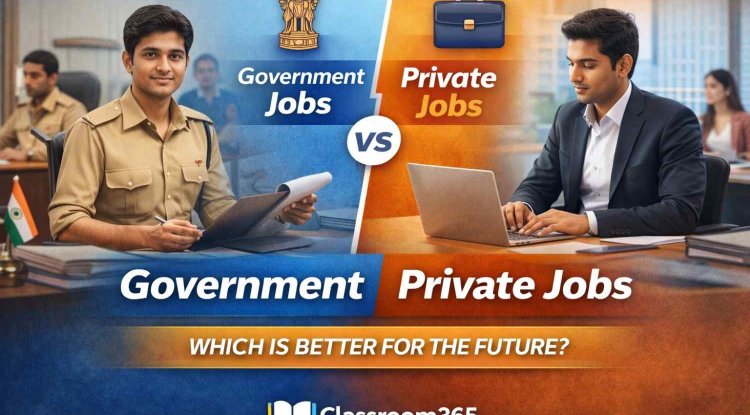
Government Jobs vs Private Jobs in India: Which Is Better for the Future? | Classroom365
Government vs private jobs in India – which offers better growth, salary, and stability in the future? A complete comparison for students and parents.
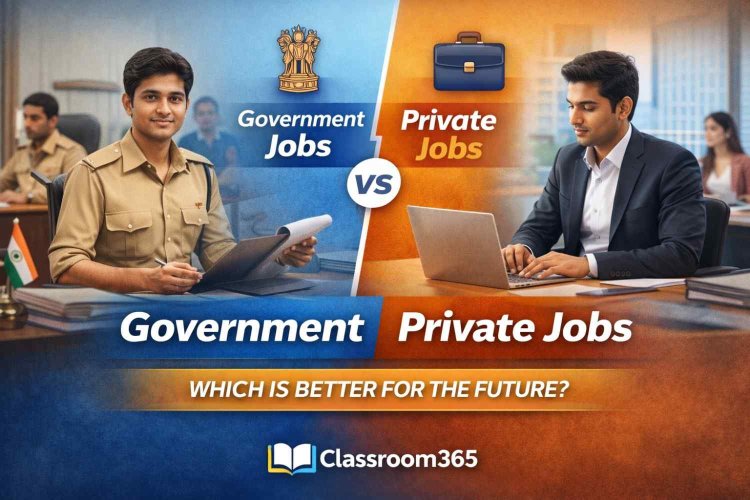
In almost every Indian household, this question comes up at some point:
“Should you prepare for a government job or join the private sector?”
For decades, government jobs were considered the gold standard of career success — stable, secure, and respectable. Meanwhile, private jobs were seen as risky but rewarding.
But in 2026, the employment landscape in India is changing rapidly.
Technology, startups, global hiring, remote work, and skill-based recruitment are reshaping career paths. So the real question is no longer:
Which is better — government or private?
It is:
Which is better for your skills, goals, and the future economy?
Let’s explore both sides honestly and practically.
Why Government Jobs Have Always Been Attractive
Government jobs in India have traditionally been popular because of:
-
Job security
-
Fixed working hours
-
Pension benefits (in many cases)
-
Social respect
-
Structured promotions
Organizations like the Union Public Service Commission and Staff Selection Commission conduct competitive exams that attract millions of aspirants every year.
For many families, especially middle-class households, a government job represents financial stability and long-term security.
Why Private Jobs Are Gaining Momentum
On the other hand, India’s private sector has expanded significantly.
According to the Ministry of Statistics and Programme Implementation, the services and corporate sectors continue to contribute a major share of India’s GDP.
Private jobs today offer:
-
Faster salary growth
-
Performance-based incentives
-
International exposure
-
Skill development opportunities
-
Entrepreneurial learning environment
Especially in industries like IT, fintech, AI, e-commerce, and digital marketing, private careers are growing faster than ever.
Government Jobs: Advantages & Limitations
✅ Advantages
1️⃣ High Job Security
Layoffs are rare compared to private companies.
2️⃣ Predictable Income
Stable salary structure with allowances.
3️⃣ Work-Life Balance (in many roles)
Fixed timings in most departments.
4️⃣ Social Status
Government officers often receive strong social respect.
❌ Limitations
1️⃣ Slow Career Growth
Promotions depend on seniority more than performance.
2️⃣ Salary Ceiling
Income growth may not match private sector peaks.
3️⃣ Limited Innovation
Many roles follow traditional systems.
4️⃣ High Competition
Exams are extremely competitive — lakhs compete for limited seats.
Private Jobs: Advantages & Limitations
✅ Advantages
1️⃣ Rapid Career Growth
Performance-based promotions.
2️⃣ High Income Potential
Top performers can earn significantly more.
3️⃣ Global Opportunities
Multinational companies offer international exposure.
4️⃣ Skill Development
Continuous learning is necessary — and rewarded.
❌ Limitations
1️⃣ Job Instability
Layoffs can happen during economic downturns.
2️⃣ Performance Pressure
Targets and deadlines can increase stress.
3️⃣ Work-Life Imbalance (in some sectors)
Long hours in competitive industries.
The Future Outlook: What Will Matter More?
The World Economic Forum highlights that future careers will be shaped by:
-
Adaptability
-
Digital literacy
-
Problem-solving
-
Emotional intelligence
???? https://www.weforum.org/reports/the-future-of-jobs-report-2023/
This suggests that skills and adaptability will matter more than the type of employer.
Sector-Wise Future Trends in India
???? Government Sector Future
-
Increased digitisation
-
Policy reforms
-
Growth in regulatory & administrative roles
-
Focus on governance technology
???? Private Sector Future
-
AI & automation expansion
-
Startup ecosystem growth
-
Global remote hiring
-
Freelancing & gig economy rise
The future workforce will not be defined by “government vs private” — but by skill relevance.
Salary Comparison: Long-Term Perspective
-
Government jobs offer stable but gradual increments.
-
Private jobs offer variable but potentially exponential growth.
In 10–15 years, a highly skilled private professional may earn significantly more than a government employee. However, a government employee may experience lower financial risk.
The decision depends on your risk appetite and ambition level.
Work-Life Balance: Myth vs Reality
Not all government jobs are relaxed. Not all private jobs are stressful.
-
Some administrative government roles can be highly demanding.
-
Many modern companies now offer flexible work culture and hybrid models.
Work-life balance depends more on role and organisation than sector.
Which Is Better in the Future?
There is no universal answer.
Choose Government Job If:
-
You prioritise stability over rapid growth
-
You prefer structured systems
-
You are comfortable with long exam preparation
-
You value social prestige
Choose Private Job If:
-
You enjoy challenges and innovation
-
You want faster income growth
-
You are adaptable and skill-focused
-
You prefer dynamic environments
The Real Secret: Skills Matter More Than Sector
Whether government or private, success depends on:
✔ Communication skills
✔ Problem-solving ability
✔ Digital literacy
✔ Emotional intelligence
✔ Adaptability
The Organisation for Economic Co-operation and Development emphasizes that career success in modern economies depends on lifelong learning.
???? https://www.oecd.org/education/
What Parents Must Understand
Parents often push children toward government jobs for safety.
But the future economy rewards:
-
Competence
-
Innovation
-
Continuous learning
Instead of asking:
“Government ya private?”
Ask:
“What are my child’s strengths?”
The right career is the one aligned with aptitude, interest, and future demand.
Final Thoughts: Stability vs Growth — The Balanced View
Government jobs offer security and structure.
Private jobs offer growth and opportunity.
In the future:
???? Stability alone may not guarantee prosperity.
???? Growth alone may not guarantee peace.
The ideal approach is:
Choose the path that matches your personality —
And build skills that make you future-proof.
Because in 2026 and beyond,
skills will define success — not just job type.
— Classroom365
What's Your Reaction?